


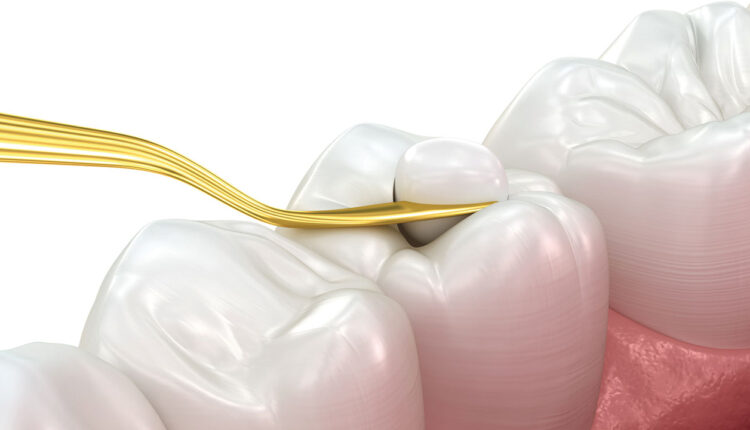
The Science Behind Universal Composites
Today’s universal composites may all promise excellent esthetics and strength, but understanding how filler technology, resin chemistry, and photoinitiator systems differ can help clinicians make more informed restorative decisions.
PURCHASE COURSE
This course was published in the September/October 2026 issue and expires October 2029. This two-unit CE course is supported by an unrestricted educational grant from BISCO. This 2 credit hour self-study activity is electronically mediated.
This course was published in the September/October 2026 issue and expires October 2029. This two-unit CE course is supported by an unrestricted educational grant from BISCO. This 2 credit hour self-study activity is electronically mediated.
AGD Subject Code: 780
EDUCATIONAL OBJECTIVES
After reading this course, the participant should be able to:
- Describe the evolution of resin-based composite technology.
- Identify the roles of filler architecture, resin matrix composition, and photoinitiator systems in influencing the properties of universal composites.
- Discuss how polymerization shrinkage, shrinkage stress, depth of cure, and gloss retention affect contemporary universal composite materials.
Introduction
Composite dentistry has evolved significantly, from early macrofill systems to today’s sophisticated nanohybrid and universal materials designed to deliver strength, esthetics, and clinical efficiency within a single restorative solution. Yet despite these advances, many clinicians still encounter daily challenges with handling consistency, shade predictability, and polish retention that affect both workflow and long-term outcomes.
Achieving reliable results requires more than material selection alone. It demands a working understanding of composite science, how resin matrix design, filler architecture, and polymerization stress interact, and how that science translates into a complete restorative workflow: from shade mapping and layering strategy to surface texture and finishing protocol. Equally important is the ability to recognize and correct common composite failures before they affect the patient, and to integrate direct composite confidently into comprehensive treatment planning.
This continuing education article explores those principles in the context of modern universal composite design. Materials, such as BISCO’s Quantium Universal Composite, which incorporates an advanced blend of nano, micro, and pre-polymerized filler technologies, represent a new generation of restorative materials developed to support the demands of a complete, contemporary clinical workflow, from routine posterior restorations to esthetically driven anterior cases.
Mastering Modern Composite Dentistry
The term “universal composite” describes contemporary materials that may be used clinically in both anterior and posterior indications. Although there is no defined compositional or microstructural requirement of a universal composite, this term implies the composite will have sufficient mechanical properties for posterior applications and optical properties for anterior applications.
Before the introduction of resin-based composites, esthetic restorations were limited to brittle silicate cements and unfilled acrylic resins with high polymerization shrinkage.1,2 The modern dental composite was introduced in the early 1960s when Bowen synthesized BisGMA and reinforced it with silanated 150 µm glass filler.3 This material was significantly stronger and exhibited lower polymerization shrinkage than the materials it replaced.4
Early composites incorporated mechanically ground glass particles ranging from approximately 10 to 100 microns in diameter, referred to as macrofilled composites.5 The large filler particles in these macrofilled composites produced rough surfaces, poor polishability, and abrasive wear of opposing dentition.
In the late 1970s, manufacturers began incorporating colloidal silica particles produced through pyrogenic (fumed) processes, with an average diameter of approximately 40 nanometers. These fumed silica particles were initially added to fill the spaces between larger ground glass fillers, where they protected the exposed resin matrix from abrasive wear.6 The esthetic advantages of fumed silica were recognized later. Because their size is smaller than the wavelengths of visible light, voids left by fumed silica particles lost from the composite surface are visually undetectable, unlike the larger defects created by dislodged ground glass fillers.
Composites containing only fumed silica could therefore achieve an exceptionally high level of surface polish. However, incorporating fumed silica alone at high filler volumes led to particle agglomeration and poor handling. To circumvent this limitation, manufacturers introduced pre-polymerized resin filler (PPRF) particles, also referred to as pre-polymerized fillers (PPF), composite material polymerized in bulk, milled into 1- to 200-micron particles, and incorporated as a filler in a fresh resin matrix.5
These materials were termed microfilled composites, and remain one of the most highly polishable categories of composites. A weakness of PPRF particles, however, is that they fail at the interface between the PPRF and the surrounding resin matrix, preventing their success in load-bearing restorations.7
Throughout the 1980s and 1990s, manufacturers progressively reduced the size of ground glass fillers, while continuing to incorporate fumed silica particles.8 These so-called hybrid composites, which combined ground glass particles with colloidal silica, became the dominant category for posterior restorations because they balanced mechanical strength with polishability. As filler particle sizes continued to decrease, the term microhybrid emerged to describe composites combining ground glass particles smaller than approximately 1 micron with discrete colloidal silica.4
In the 2000s, nanotechnology was applied to composite design.9,10 Nanofilled composites use discrete nanoscale particles, including spherical silica and zirconia-silica particles in the 5 to 20 nanometer range, together with nanocluster agglomerates approximately 0.6 microns in average diameter that behave as larger functional fillers while retaining the polishability and gloss retention characteristic of nanoscale components.10
A more recent approach to filler architecture has been the development of uniform spherical silica fillers produced through controlled chemical synthesis with average diameters in the range of approximately 150 to 500 nanometers. These suprananofilled composites differ from conventional nanohybrid and nanofilled in that the particles are larger and highly uniform in size and spherical in shape, which allows efficient packing and high filler loading without the handling problems associated with broad particle size distributions.11,12
Components of Contemporary Composite Resins
Filler particles are produced from a variety of inorganic sources, including mined quartz, melt-derived glasses, colloidal silica, and crystalline ceramics.9 Heavy metal glasses containing barium, strontium, ytterbium, or zirconium are commonly used because they provide radiopacity in addition to mechanical reinforcement.8
Fabrication occurs through two principal methods:
- Mechanical grinding of larger glass particles, which produces irregularly shaped particles that cannot practically be made smaller than approximately 0.1 microns in diameter9
- Chemical precipitation, which produces spherical, colloidal silica particles ranging in size from 40 nm nanofillers to 500 nm fillers in suprananofilled composites.
Clusters of nanoscale colloidal silica in agglomerates and PPRF particles can also be derived. These fillers comprise the majority of filler types in contemporary universal composites.
Although particulate fillers dominate contemporary composite formulations, an alternative reinforcement strategy uses short glass fibers rather than discrete particles. Short fiber-reinforced composites incorporate E-glass fibers approximately 1 to 2 millimeters in length within an otherwise conventional methacrylate matrix.13 The clinical rationale for fiber reinforcement is improved fracture toughness: fibers oriented within the composite arrest crack propagation through crack-bridging, crack-deflection, and fiber-pullout mechanisms that are not available to particulate composites.14 Fiber-reinforced composites are typically used as a base layer in restorations for their toughening properties and are generally recommended to be covered with a layer of particulate composite to achieve desirable esthetic properties. Some new research, however, has reported favorable esthetic properties of a fiber-reinforced composite.15
The organic resin matrix is composed of one or more monomers, a diluent, a polymerization inhibitor, and a photoinitiator system. The primary monomer in most contemporary composites is either BisGMA or urethane dimethacrylate (UDMA), often in combination. BisGMA produces a polymer with high modulus and dimensional stability but is highly viscous and prone to water absorption.16
UDMA replaces the rigid aromatic center of BisGMA with a more flexible urethane linkage, resulting in lower viscosity and improved toughness and wear resistance.17,18 Because BisGMA has a viscosity approaching 1,000,000 mPa·s, a low-viscosity diluent monomer, such as triethylene glycol dimethacrylate (TEGDMA), is typically added to improve handling and allow adequate filler incorporation. TEGDMA also increases the degree of conversion of the composite during polymerization, but its lower molecular weight contributes to greater polymerization shrinkage.16,19 Manufacturers balance the BisGMA-to-TEGDMA ratio carefully to optimize handling, conversion, shrinkage, and final mechanical properties.
Photoinitiator systems. For more than four decades, the dominant photoinitiator in dental composites has been camphorquinone (CQ), an alpha-diketone that absorbs visible light with a peak near 468 nanometers, well within the output range of standard dental LED curing units. CQ is a Norrish Type II photoinitiator, meaning it requires a co-initiator. It is also an intense yellow powder, and although this color partially bleaches during polymerization, residual yellowing can affect the shade of bleached and high-value composites.25
To address these limitations, alternative photoinitiator systems have been introduced. Norrish Type I photoinitiators, such as 2,4,6-trimethylbenzoyl-diphenylphosphine oxide and bisacylphosphine oxide, do not require co-initiators and produce comparable or higher degrees of conversion than CQ. However, because they absorb at shorter wavelengths (maxima near 400 nanometers), composites containing them require polywave or broad-spectrum LED units that emit violet light in addition to blue.
More recently, germanium-based photoinitiators, such as dibenzoyl germanium, have been introduced. These absorb in the near-violet to blue range with a maximum near 418 nanometers that overlaps the output of standard LED units, do not require co-initiators, and offer excellent color stability.25 Their higher photoreactivity also enables a greater depth of cure than comparable CQ-based formulations.26 The clinical relevance of incorporating this newer photoinitiator is to allow accelerated cure for rapid curing composites and deeper depth of cure for bulk fill composites.
Properties of Contemporary Composites
Flexural strength, elastic modulus, and wear are among the mechanical properties most commonly used to characterize composite restoratives. Filler content is a major determinant of these properties, but its influence on individual properties differs in magnitude. A recent analysis of 16 commercially available composites demonstrated a strong positive correlation between filler weight percentage and elastic modulus, but only a moderate positive correlation with flexural strength.26 The weaker relationship between filler content and strength reflects the role of the filler-matrix interface in fracture initiation: strength depends not only on the volume of reinforcing filler but also on the size, shape, and silane integrity of the filler particles and on the homogeneity of their distribution within the matrix. Modulus, by contrast, is governed primarily by stress transfer between filler and matrix and is less sensitive to particle morphology.
Wear behavior is influenced by filler particle size, filler loading, silane coupling integrity, and the degree of conversion of the resin matrix. Smaller filler particles reduce the depth of resin matrix exposed between fillers, reducing the magnitude of the so-called “protection hypothesis” in which composite is selectively worn away at the resin exposed between filler particles.27 Nanofilled and supra-nanofilled composites have demonstrated wear resistance comparable to or better than microhybrid materials, in part because their uniform or nanocluster architectures allow individual particles to wear away in proportion with the surrounding matrix, preserving surface integrity.28,29
The clinical success of an esthetic restoration depends not only on its mechanical performance but also on its ability to match the optical properties of the surrounding tooth structure. Increasing filler content generally reduces translucency, as filler particles scatter transmitted light.26 The depth of cure of the composites can also be improved by increasing composite translucency, however, depth of cure can also be improved by using a more photoactive germanium-based initiator system that absorbs more efficiently and generates more free radicals per unit of light energy delivered.26
Uniform spherical silica fillers in the 150 to 300 nanometer range in suprananofilled composites have introduced a further optical refinement: they scatter visible light selectively, producing a wavelength-dependent reflection that reflects light in the yellow and red spectrum.30 This phenomenon, sometimes referred to as structural color, underlies the development of single-shade universal composites that match a range of tooth shades without requiring multiple opacities and pigmentations.
Gloss retention, the ability of a composite to maintain a polished surface over time, depends on the uniform wear of filler and matrix at the composite surface. In composites containing larger ground glass particles, the resin matrix between and around the particles is preferentially worn by abrasion, leaving the harder filler particles to protrude from the surface. As these particles continue to lose support from the surrounding matrix, they are eventually plucked from the surface, creating concavities that scatter light and dull the restoration.31
Composites containing only nanoscale fillers, uniform spherical fillers, or nanocluster architectures avoid this mechanism: their constituent particles are smaller than the wavelengths of visible light, so the small voids created by individual particle loss do not produce optically detectable defects. Systematic review evidence confirms that suprananofilled, nanofilled, and microfilled composites consistently maintain smoother and glossier surfaces than microhybrid, nanohybrid, and conventional hybrid composites following polishing and simulated toothbrush abrasion, with composites containing small, spherical particles demonstrating the best long-term gloss retention.31
Polymerization Shrinkage and Shrinkage Stress
Polymerization shrinkage arises from the conversion of inter-monomer van der Waals distances to shorter covalent bond lengths during network formation.16 Of greater clinical concern than shrinkage itself, however, is the resulting shrinkage stress at the adhesive interface, which can compromise marginal adaptation, contribute to post-operative sensitivity, and predispose restorations to marginal staining or recurrent caries.21
The relationship between filler content and shrinkage stress is more complex than the relationship between filler content and volumetric shrinkage. Although increasing filler content reduces the volume fraction of polymerizing resin and therefore the magnitude of shrinkage, the same increase in filler content raises the elastic modulus of the composite, which amplifies the stress generated by any given amount of shrinkage.26 A recent analysis of 16 commercially available composites found no significant correlation between filler weight percentage and shrinkage stress, suggesting that resin formulation, monomer composition, and the kinetics of polymerization play a larger role than filler content in determining the final stress generated at the bonded interface.26 Interestingly, that analysis also found that the bulk-fill version of a flowable composite produced lower shrinkage stress than the conventional flowable from the same manufacturer in some product families but not in others.
Several strategies have been used to reduce polymerization shrinkage and shrinkage stress through monomer modification. Because shrinkage occurs as monomers move from their initial separation distance to the shorter length of a covalent bond, reducing the number of reactive double bonds per unit volume of resin proportionally reduces the total shrinkage produced during polymerization. This can be achieved by increasing monomer molecular weight, which spaces reactive sites further apart along each molecule, or by incorporating hybrid organic-inorganic polymers that contribute an inorganic backbone with relatively few reactive sites.21
Addition-fragmentation monomers take a different approach: rather than reducing the total shrinkage, they reduce shrinkage stress by undergoing reversible bond exchange during polymerization, which allows the developing polymer network to rearrange and relax internal stresses before they can be transferred to the cavity walls.20 Modulated polymerization kinetics, which slow the rate of network development and extend the gel phase during which the composite can flow and adapt, similarly allow shrinkage to occur without generating stress at the bonded interface and have been used in flowable bulk-fill materials.24
Conclusion
The evolution of resin-based composites, from Bowen’s original BisGMA-silica formulation to today’s nanohybrid and suprananofilled materials, reflects more than 60 years of incremental refinement in filler technology and resin chemistry. Contemporary microhybrid, nanofilled, and suprananofilled composites achieve a filler architecture fine enough for anterior polishability while retaining the mechanical properties needed for posterior load-bearing restorations, which is what qualifies them as universal composites.
Within these categories, the clinical performance of any individual product is shaped largely by two variables: its photoinitiator system and its resin matrix. The photoinitiator governs depth of cure and curing time, while the resin system is the significant determinant of polymerization shrinkage and the resulting stress at the bonded interface. Understanding how these components interact allows clinicians to select composites more deliberately, rather than relying on marketing claims of universality alone.
References
- Paffenbarger GC, Nelsen RJ, Sweeny WT. Direct and indirect filling resins: A review of some physical and chemical properties. J Am Dent Assoc. 1953;47:516-524.
- Skinner EW. A comparison of the properties and uses of silicate cement and acrylic resin in operative dentistry. J Am Dent Assoc. 1959;58:27-36.
- Bowen RL. Properties of a silica-reinforced polymer for dental restorations. J Am Dent Assoc. 1963;66:57-64.
- Ferracane JL. Current trends in dental composites. Crit Rev Oral Biol Med. 1995;6:302-318.
- Lutz F, Phillips RW. A classification and evaluation of composite resin systems. J Prosthet Dent. 1983;50:480-488.
- Lang BR, Jaarda M, Wang RF. Filler particle size and composite resin classification systems. J Oral Rehabil. 1992;19:569-584.
- Lambrechts P, Vanherle G. Structural evidences of the microfilled composites. J Biomed Mater Res. 1983;17:249-260.
- Bayne SC, Heymann HO, Swift EJ, Jr. Update on dental composite restorations. J Am Dent Assoc. 1994;125:687-701.
- Mitra SB, Wu D, Holmes BN. An application of nanotechnology in advanced dental materials. J Am Dent Assoc. 2003;134:1382-1390.
- Ferracane JL. Resin composite — state of the art. Dent Mater. 2011;27:29-38.
- Wang R, Bao S, Liu F, et al. Monodisperse silica-filled composite restoratives: Mechanical and light transmission properties. Dent Mater. 2017;33:280-287.
- Wang R, Habib E, Zhu XX. Evaluation of the filler packing structures in dental resin composites: From theory to practice. Dent Mater. 2018;34:1014-1023.
- Garoushi S, Gargoum A, Vallittu PK, Lassila L. Short fiber-reinforced composite restorations: A review of the current literature. J Investig Clin Dent. 2018;9:e12330.
- Jakab A, Palkovics D, Szabó V, et al. Mechanical performance of extensive restorations made with short fiber-reinforced composites without coverage: A systematic review of in vitro studies. Polymers (Basel). 2024;16:590.
- Babaier R, Garoushi S, Vallittu P, Säilynoja E, Lassila L, Watts DC. Effects of different polishing systems on gloss and roughness of cad/cam reinforced resin composites: An in vitro study. Clin Oral Investig. 2026;30:246.
- Peutzfeldt A. Resin composites in dentistry: The monomer systems. Eur J Oral Sci. 1997;105:97-116.
- Asmussen E, Peutzfeldt A. Influence of uedma, bisgma and tegdma on selected mechanical properties of experimental resin composites. Dent Mater. 1998;14:51-56.
- Musanje L, Ferracane JL, Ferracane LL. Effects of resin formulation and nanofiller surface treatment on in vitro wear of experimental hybrid resin composite. J Biomed Mater Res B Appl Biomater. 2006;77:120-125.
- Gonçalves F, Azevedo CLN, Ferracane JL, Braga RR. Bisgma/tegdma ratio and filler content effects on shrinkage stress. Dent Mater. 2011;27:520-526.
- Ghayeghchi MM, Atai M, Nodehi A. Addition-fragmentation chain transfer monomer in dental resins: Synthesis, characterization, and properties. Dent Mater. 2025;41:1442-1453.
- Braga RR, Ballester RY, Ferracane JL. Factors involved in the development of polymerization shrinkage stress in resin-composites: A systematic review. Dent Mater. 2005;21:962-970.
- Ilie N, Hickel R. Resin composite restorative materials. Aust Dent J. 2011;56:59-66.
- Weinmann W, Thalacker C, Guggenberger R. Siloranes in dental composites. Dent Mater. 2005;21:68-74.
- Ilie N, Hickel R. Investigations on a methacrylate-based flowable composite based on the sdr technology. Dent Mater. 2011;27:348-355.
- Kowalska A, Sokolowski J, Bociong K. The photoinitiators used in resin based dental composite—a review and future perspectives. Polymers (Basel). 2021;13:470.
- Lopez C, Nizami B, Robles A, Gummadi S, Lawson NC. Correlation between dental composite filler percentage and strength, modulus, shrinkage stress, translucency, depth of cure and radiopacity. Materials (Basel). 2024;17:3901.
- Bayne SC, Taylor DF, Heymann HO. Protection hypothesis for composite wear. Dent Mater. 1992;8:305-309.
- Ahmed N, Abbasi MS, Haider S, et al. Smart monochromatic composite: A literature review. Int J Dent. 2022;2022:2445394.
- Ferracane JL. Is the wear of dental composites still a clinical concern? Is there still a need for in vitro wear simulating devices? Dent Mater. 2006;22:689-692.
- Yamaguchi S, Karaer O, Lee C, Sakai T, Imazato S. Color matching ability of resin composites incorporating supra-nano spherical filler producing structural color. Dent Mater. 2021;37:e269-e275.
- Amaya-Pajares SP, Koi K, Watanabe H, da Costa JB, Ferracane JL. Development and maintenance of surface gloss of dental composites after polishing and brushing: Review of the literature. J Esthet Restor Dent. 2022;34:15-41.
From Decisions in Dentistry. September/October 2026;12(2):28-31.