


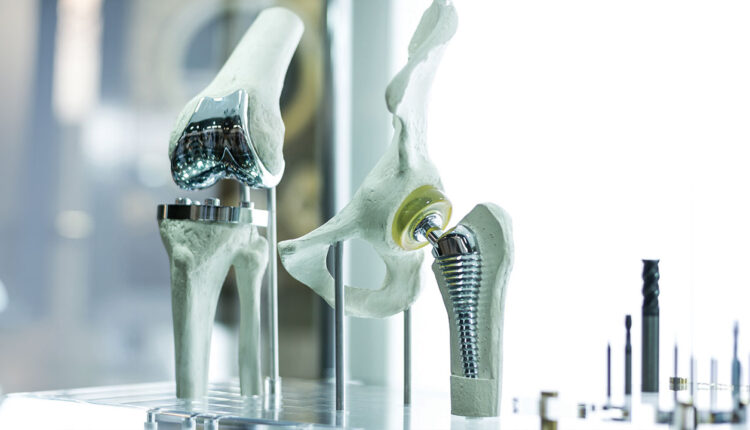
The Antibiotic Myth in Joint Replacement
Despite decades of routine premedication for patients with hip and knee implants, current evidence shows no meaningful reduction in periprosthetic joint infection risk for most dental procedures.
PURCHASE COURSE
This course was published in the September/October 2026 issue and expires October 2029. The authors have no commercial conflicts of interest to disclose. This 2 credit hour self-study activity is electronically mediated.
This course was published in the September/October 2026 issue and expires October 2029. The authors have no commercial conflicts of interest to disclose. This 2 credit hour self-study activity is electronically mediated.
AGD Subject Code: 490
EDUCATIONAL OBJECTIVES
After reading this course, the participant should be able to:
- Discuss current literature and expert recommendations on indications for antibiotic prophylaxis.
- Identify optimal timing of dental procedures in relation to total hip and knee arthroplasty.
- Explain clinical scenarios in which either delay or prophylaxis may be warranted.
Total hip and knee arthroplasties (TJA) are among the most frequently performed surgical procedures in North America, with more than 1 million performed annually in the United States.1 By 2060, the total number of hip replacements is projected to increase by 659% while the number of total knee replacements is estimated to increase by 469%.1 This tremendous growth in the number of these surgeries will also raise the risk of periprosthetic joint infection (PJI).
Although the incidence of PJI is relatively low, affecting approximately 1% to 2% of primary arthroplasties, the consequences are significant.2 PJI is associated with significant patient morbidity, often requiring complex and prolonged treatment involving surgical debridement, long-term intravenous antibiotic therapy, or complete implant removal followed by staged reimplantation.2 In severe cases, especially when infection becomes chronic or systemic, patients may require permanent resection arthroplasty or even amputation.3
Furthermore, the mortality rate following PJI is up to 2.5 times higher than that of noninfected arthroplasty patients, particularly among older adults or those with comorbidities.4,5 PJI also significantly compromises implant survival and functional outcomes. Infected implants demonstrate lower long-term success rates due to poor osseointegration, soft tissue damage, and biomechanical instability.4,5 The impact of PJI on the healthcare system is equally profound. The management of periprosthetic joint infections can increase treatment costs by up to fivefold compared to uncomplicated primary arthroplasty.6
History of Antibiotic Prophylaxis
The use of antibiotic prophylaxis before dental procedures was historically recommended in the dental and orthopedic communities as a precautionary measure to prevent PJI. This recommendation was based on the theoretical concern that transient bacteremia resulting from invasive dental procedures (IDP), particularly those involving manipulation of the gingiva, periapical tissues, or perforation of the oral mucosa, could lead to hematogenous seeding of prosthetic joints. Dental extractions, scaling and root planing, and probing are associated with the highest frequency of bacteremia.7 Viridans group streptococci, a major component of the oral flora, were considered the primary organisms of concern due to their capacity to enter the bloodstream and potentially colonize distant sites, including joint prostheses. This precautionary antibiotic prophylaxis approach was widely adopted in dentistry, despite limited direct evidence linking dental procedures to subsequent PJI events.3
Early guidelines, such as the 2003 joint statement by the American Dental Association (ADA) and the American Academy of Orthopaedic Surgeons (AAOS) recommended administering 2 grams of amoxicillin, or 600 mg of clindamycin in penicillin-allergic individuals, 1 hour prior to invasive dental procedures.³ These recommendations were recommended following joint replacement surgery, regardless of the type of dental procedure performed or the presence of individual patient risk factors. However, over the subsequent decade, multiple studies demonstrated that transient bacteremia is not unique to dental treatment but occurs more frequently during routine daily activities such as tooth brushing, flossing, and mastication.4,5
In response to the evolving evidence base, the ADA and the AAOS updated their joint guidance in 2012, acknowledging that the available data were inconclusive. They stated that no direct evidence existed to either support or refute a definitive association between dental procedures and PJI and therefore determined that routine antibiotic prophylaxis could not be universally recommended for all patients with prosthetic joints.
Unlike the earlier 2003 guidelines, the 2012 statement did not endorse a specific antibiotic regimen. Instead, it emphasized individualized decision-making and encouraged oral health professionals to exercise professional judgment in collaboration with orthopedic surgeons and patients. A case-by-case risk assessment was recommended, considering the patient’s medical history; presence of comorbid conditions such as immunosuppression or poorly controlled diabetes; type and timing of the joint replacement; and the nature of the planned dental procedure. This represented a significant departure from the prior precautionary approach, signaling a shift toward more personalized, evidence-informed care.8 This shift occurred in parallel with growing awareness of the risks associated with antibiotic use, including gastrointestinal disturbances, hypersensitivity reactions, adverse drug reactions, antimicrobial resistance, and Clostridioides difficile infection, which outweigh any theoretical benefit in most patients.9
By 2015, the ADA issued a strong recommendation against routine antibiotic prophylaxis for dental procedures in patients with prosthetic joints.10 This recommendation was based on a systematic review of the literature, which found no compelling evidence linking invasive dental procedures to the development of PJI. The guideline issued a strong recommendation that, in general, antibiotic prophylaxis is not recommended prior to dental procedures for patients with prosthetic joint implants.10 It emphasized that maintaining good oral hygiene and regular dental care are more critical in reducing the overall risk of systemic infections. Furthermore, it advised clinicians to reserve prophylactic antibiotics only for specific high-risk individuals (such as those with immunosuppression, poorly controlled diabetes, or prior history of PJI), in consultation with their orthopedic surgeon or medical specialist.
The AAOS reinforced this position with its 2016 Appropriate Use Criteria, emphasizing interdisciplinary coordination and clinical judgment.11 These updates reinforced the conclusions of the 2015 guideline, emphasizing no established causal link exists between invasive dental procedures and PJI. Moreover, the ADA highlighted that the risks associated with antibiotic use. Subsequent updates by the ADA reaffirmed that routine antibiotic prophylaxis prior to dental procedures is not indicated for patients with prosthetic joint implants.12,13
Finally, in an interesting 2024 study, Brenner et al14 concluded that there was an increased infection rate in patients with teeth at 6 months and greater since the primary TJA. Their conclusion was that just having teeth is a potential risk factor for late PJI.14
Even with the overwhelming body of evidence that exists today, Thornhill et al15 reported in the Journal of the American Dental Association that US dentists are under pressure from orthopedic surgeons and their patients with prosthetic joints to provide antibiotic for IDPs. Some orthopedic surgeons continue to recommend an antibiotics regimen before both routine (dental prophylaxis) and advanced dental treatment (extractions).
Current Evidence and Recommendations
Current literature does not support routine systemic antibiotic prophylaxis prior to dental procedures for most patients with TJA. Four major studies conducted that there were no significant difference in PJI rates between patients who received prophylaxis and those who did not, regardless of procedure type or timing.6,15-17 Furthermore, they demonstrated that the absolute risk of developing a PJI following dental treatment is exceedingly low.
In addition, in 2024 Simon et al18 reviewed the records of 10,894 patients who didn’t receive antibiotic prophylaxis and found only four dental-associated PJIs, concluding that routine antibiotic prophylaxis prior to dental procedures were not shown to affect the risk of late-presenting PJI. Masuda et al19 found similar results and questioned the recommendation of antibiotic resistance. Springer et al,20 in a study of an English population in which antibiotic prophylaxis is not routinely recommended, concluded that because they did not find a significant positive association between IDPs and PJI, there is no justification for administering antibiotic prophylaxis prior to dental procedures in patients with prosthetic joints. They emphasized that routine antibiotic prophylaxis would add cost and inconvenience, expose patients to potential adverse drug reactions, and contribute to unnecessary antibiotic use, which can promote antimicrobial resistance.
In contrast, the risks associated with unnecessary antibiotic use are well documented. These include allergic reactions, gastrointestinal disturbances, and C. difficile infection, as well as broader public health concerns such as the emergence of antibiotic-resistant organisms and increased healthcare costs.10 Given the absence of demonstrated clinical benefit and the presence of well-established risks, routine antibiotic prophylaxis is not justified for most patients with stable joint prostheses and no significant systemic health concerns.
In support of minimizing the use of antibiotic prophylaxis, in November 2024, the combined AAOS and the American Association of Hip and Knee Surgeons published a detailed paper supporting the recommendation that the routine use of antibiotics is not supported by the literature.21 They concluded that routine systemic antibiotic prophylaxis before dental procedures in patients with hip or knee replacements is unlikely to reduce the risk of subsequent prosthetic joint infection. They indicated that the available evidence does not support the practice as an effective preventive strategy. Ideally, this will help the dental community reduce unnecessary antibiotic prophylaxis and curb the current estimated $59 million annual cost, which is likely to rise as arthroplasty rates continue to increase.15
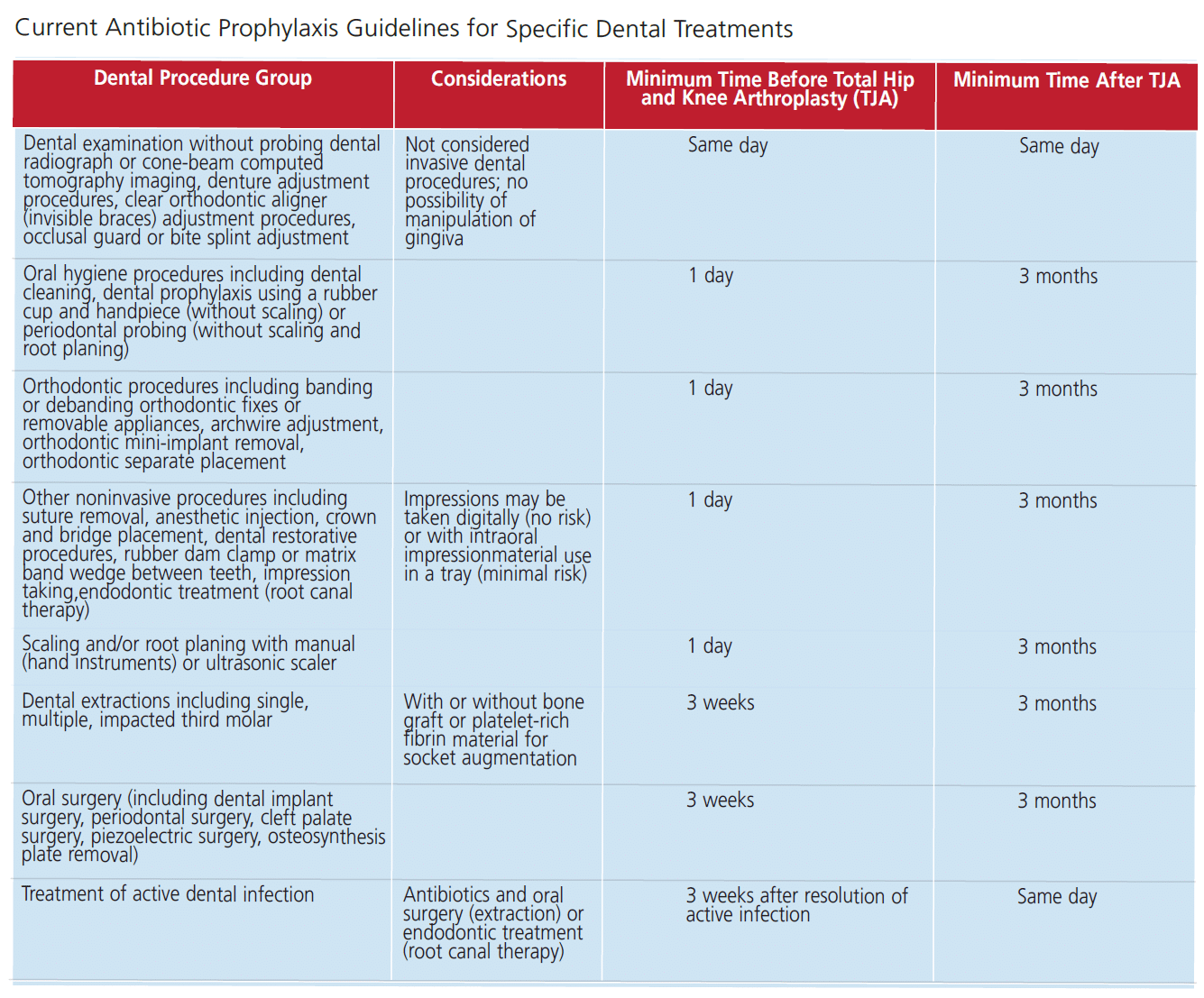
When Antibiotic Prophylaxis Is Not Indicated
Antibiotic prophylaxis is not recommended for routine dental procedures, such as dental prophylaxis or noninvasive restorations, especially in patients without systemic comorbidities.11 Patients who are more than 3 to 6 months post-arthroplasty with well-functioning prostheses and no history of PJI do not require antibiotic coverage. Similarly, daily oral hygiene activities, including brushing, flossing, and chewing, are not indications for antibiotic prophylaxis.5,6
Indications for Antibiotic Prophylaxis
Although routine antibiotic prophylaxis is not recommended for most patients with TJA, it may be indicated in select clinical scenarios.
Antibiotic prophylaxis may be considered within the 3 three months following joint replacement surgery. During this period, increased local vascularity and ongoing soft tissue healing may theoretically elevate the risk of hematogenous seeding of the site.11 Although this association has not been definitively established, many expert panels support the use of antibiotic prophylaxis for invasive dental procedures performed during the early post-operative phase.
Patients with certain systemic conditions are considered at elevated risk for PJI and may benefit from antibiotic prophylaxis. These include individuals with a prior history of PJI, immunocompromised states (eg, human immunodeficiency virus/acquired immunodeficiency syndrome, chemotherapy, prolonged corticosteroid use), poorly controlled diabetes (HbA1c >8%), and inflammatory arthropathies such as rheumatoid arthritis or systemic lupus erythematosus. Additional risk factors include end-stage organ disease, severe malnutrition, and systemic frailty.12,23,24
Dental interventions that induce significant bacteremia may warrant antibiotic prophylaxis in medically compromised individuals. These include tooth extractions, periodontal surgery, scaling and root planing, dental implant placement, and apical endodontic surgery.4,22
The presence of acute oral infections, such as odontogenic abscesses, cellulitis, or advanced periodontitis, represents another clinical indication for antibiotic prophylaxis before dental intervention, particularly in high-risk patients.
When antibiotic prophylaxis is indicated, the standard regimen consists of amoxicillin 2 grams orally 30 to 60 minutes before the procedure.3 For patients with a penicillin allergy, clindamycin 600 mg, azithromycin 500 mg, or clarithromycin 500 mg may be used; however, clindamycin should be prescribed cautiously due to its association with C. difficile colitis.9
Total Joint Arthroplasty
Two clinical timing questions frequently arise in perioperative management:
- When to perform dental procedures following TJA?
- When to proceed with TJA after recent dental treatment.?
If a dental surgical procedure precedes the TJA, timing should allow for complete mucosal healing to minimize the risk of bacteremia and systemic microbial dissemination
Oral wound healing progresses through distinct phases: inflammation (3 to 5 days), proliferation (up to 14 days), and remodeling (up to 6 weeks), with delayed healing observed in patients with diabetes or other systemic conditions. Rodriguez25 emphasized that full epithelialization, typically achieved within 21 days, is key to minimizing the risk of bacteremia. Consequently, elective TJA should generally be scheduled no earlier than 3 weeks after invasive dental procedures, provided soft tissue healing is complete and there are no signs of residual infection.
The consensus generally recommends deferring elective invasive dental procedures for approximately 3 months post-operatively. This precaution is based on the biological rationale that the early post-operative phase is marked by active tissue remodeling, neovascularization, and heightened local perfusion near the prosthetic site, potentially increasing susceptibility to hematogenous bacterial seeding.11 Although Thornhill et al15 found no increased PJI risk from dental procedures, their studies did not specifically examine the early post-operative period. Supporting this precautionary delay, Martins et al,22 in a systematic review of 89 studies, confirmed that extractions and periodontal procedures are associated with the highest incidence of bacteremia (62% to 66% and 36% to 44%, respectively), further supporting temporary delay.22
Conclusion
PJI is a rare but serious complication of TJA and its prevention requires thoughtful coordination between dental and orthopedic providers. Current evidence does not support the routine use of antibiotic prophylaxis for dental procedures in patients with prosthetic joints. Instead, a risk-stratified approach is recommended, reserving prophylaxis for high-risk individuals, those in the early post-operative period, or those presenting with active oral infections.
Elective IDPs should be deferred for approximately 3 months following TJA, while elective arthroplasty should be scheduled at least 3 weeks after invasive dental treatment to ensure adequate mucosal healing. These evidence-based guidelines aim to reduce unnecessary antibiotic use, promote antimicrobial stewardship, and ensure patient safety through individualized, interdisciplinary care.
References
- Shichman I, Askew N, Habibi A, et al. Projections and epidemiology of revision hip and knee arthroplasty in the United States to 2040–2060. Arthroplast Today. 2023;21:101152.
- Villa JM, Rajschmir K, Lin S, Higuera-Rueda CA. What is the true impact of periprosthetic joint infection diagnosis on mortality? J Arthroplasty. 2024;39:S410–S414.
- American Dental Association; American Academy of Orthopaedic Surgeons. Advisory statement: antibiotic prophylaxis for dental patients with total joint replacements. J Am Dent Assoc. 2003;134:895–899.
- Tomas I, Diz P, Tobias A, Scully C, Donos N. Periodontal health status and bacteraemia from daily oral activities: systematic review/meta-analysis. J Clin Periodontol. 2012;39:213–228.
- Lockhart PB, Brennan MT, Thornhill M, et al. Poor oral hygiene as a risk factor for infective endocarditis-related bacteremia. J Am Dent Assoc. 2009;140:1238–1244.
- Berbari EF, Osmon DR, Carr A, et al. Dental procedures as risk factors for prosthetic hip or knee infection: a hospital-based prospective case-control study. Clin Infect Dis. 2010;50:8–16.
- Martins CC, Lockhart PB, Firmino RT, et al. Bacteremia following different oral procedures: Systematic review and meta-analysis. Oral Dis. 2024;30:846-854.
- Watters W, Rethman MP, Hanson NB, et al. Prevention of orthopaedic implant infection in patients undergoing dental procedures. J Am Acad Orthop Surg. 2013;21:180-189.
- Lockhart PB, Tampi MP, Abt E, et al. Evidence-based clinical practice guideline on antibiotic use for the urgent management of pulpal- and periapical-related dental pain and intraoral swelling. J Am Dent Assoc. 2019;150:906–921.
- Sollecito TP, Abt E, Lockhart PB, et al. The use of prophylactic antibiotics prior to dental procedures in patients with prosthetic joints: evidence-based clinical practice guideline. J Am Dent Assoc. 2015;146:11–16.
- Quinn RH, Murray JN, Pezold R, Sevarino KS, Members of the Writing and Voting Panels of the AUC for the Management of Patients with Orthopaedic Implants Undergoing Dental ProceduresThe American Academy of Orthopaedic Surgeons appropriate use criteria for the management of patients with orthopaedic implants undergoing dental procedures. J Bone Joint Surg Am. 2017;99:161-163.
- American Dental Association. Antibiotic Prophylaxis for Prevention of Prosthetic Joint Infection Clinical Practice Guideline (2014). Available at ada.org/resources/research/science/evidence-based-dental-research/antibiotics-to-prevent-prosthetic-joint-infection. Accessed May 14, 2026.
- American Dental Association-Appointed Members of the Expert Writing and Voting Panels Contributing to the Development of American Academy of Orthopedic Surgeons Appropriate Use Criteria. American Dental Association guidance for utilizing appropriate use criteria in the management of the care of patients with orthopedic implants undergoing dental procedures. J Am Dent Assoc. 2017;148:57-59.
- Brenner, JD, Atallah, M., Yatsonsky, D. et al. Higher onset of periprosthetic joint infections in patients with teeth compared to those without teeth. Cureus. 2024;16:e63696.
- Thornhill MH, Gibson TB, Pack C, et al. Quantifying the risk of prosthetic joint infections after invasive dental procedures and the effect of antibiotic prophylaxis. J Am Dent Assoc. 2023;154:43–52.
- Kao FC, Hsu YC, Chen WH, Lin JN, Lo YY, Tu YK. Prosthetic joint infection following invasive dental procedures and antibiotic prophylaxis. Infect Control Hosp Epidemiol. 2017;38:154–161.
- Sax, OC, Baine, SS, Chen, Z, et al. Antibiotic prophylaxis is not necessary for invasive dental procedures in existing total knee arthroplasty implants. Orthopedics. 2023;46:76-81.
- Simon, SJ, Aziz, AA, Coden, GS. et al. Antibiotic prophylaxis prior to dental procedures after total hip and knee arthroplasty dies not decrease the risk of periprosthetic joint infection. J Arthoplasty. 2024 Sep;39:S420-S424.
- Masuda S, Fukasawa T, Takeuchi M, et al. Association between dental procedures and periprosthetic joint infection: A case-crossover study. J Orthop Sci. 2024;29:1145-1148.
- Springer BD, Baddour LM. Lockhart PB, et al. Antibiotic prophylaxis for prosthetic joint patients undergoing invasive dental procedures: time for a rethink? J Arthroplasty. 2022;37:1223-1226.
- Hannon CP, Grosso MJ, Fillingham YA, et al. AAOS clinical practice guideline summary prevention of total hip and knee arthroplasty periprosthetic joint infection in patients undergoing dental procedures. J Am Acad Orthop Surg. 2025;33:e1260-e1267.
- Martins M, Ruiz K, Shaughnessy M, et al. Dental procedure–induced bacteremia and the risk of prosthetic joint infection: a systematic review. Clin Oral Investig. 2023;27:1509–1518.
- Haj Yahya B, Chaushu G, Hamzani Y. Evaluation of wound healing following surgical extractions using the IPR Scale. Int Dent J. 2020;71:133-139
- Ruggiero SL. Mucosal healing and antibiotic considerations in dental management of medically compromised patients. Oral Maxillofac Surg Clin North Am. 2024;36:115–126.
- Rodriguez T. Timing of dental surgery and joint arthroplasty: how soon is safe? J Dent Res. 2024;103:220–227.
From Decisions in Dentistry. September/October 2026;12(2):36-39.