

Rethinking Ultrasonic Instrumentation for Personalized Periodontal Care
Selecting the right ultrasonic insert and refining instrumentation techniques help clinicians deliver more personalized, efficient, and patient-centered periodontal therapy.
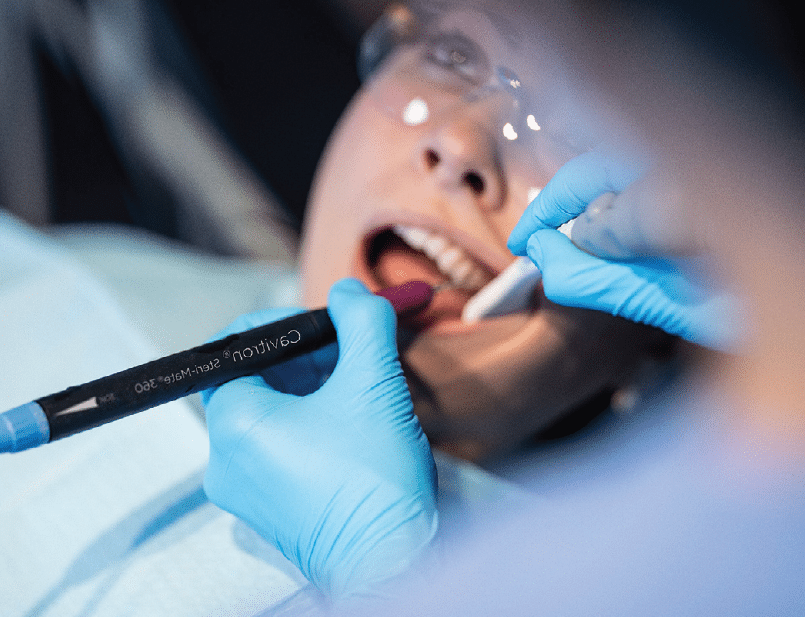 Periodontal disease is a chronic inflammatory condition driven by oral microbiome dysbiosis, leading to destruction of the tooth-supporting structures. It affects nearly half of American adults and contributes to a significant economic burden on the United States healthcare system, estimated at approximately $150 billion annually.1
As research continues to advance and patients become more aware of the connection between periodontal disease and systemic health, dental care is shifting toward a more personalized, predictive, preventive, and participatory (P4) approach.2 While patients contribute through recommended self-care practices, dental hygienists drive the predictive and preventive aspects of a P4 approach by using assessments to identify risk factors, intervene early, and implement disease-prevention therapies. Combining identified risk factors with each patient’s periodontal status allows clinicians to tailor treatment plans for personalized periodontal care.
Within a personalized treatment plan, ultrasonic instrumentation choices, including technology optimization, insert selection, and technique, play a critical role in delivering patient-centered periodontal care.
Moving Beyond ‘One-Size-Fits-All’ Insert Selection
Patient-centered periodontal care begins with the recognition that no two patients and no two mouths are the same. Variations in disease state, anatomy, tissue condition, and deposit type directly influence ultrasonic insert selection and clinical technique. From periodontal health and gingivitis to the treatment of periodontitis, thoughtful consideration of ultrasonic insert characteristics is essential to delivering effective, individualized care. The Cavitron® family of inserts supports personalized periodontal care across a wide range of patient needs.
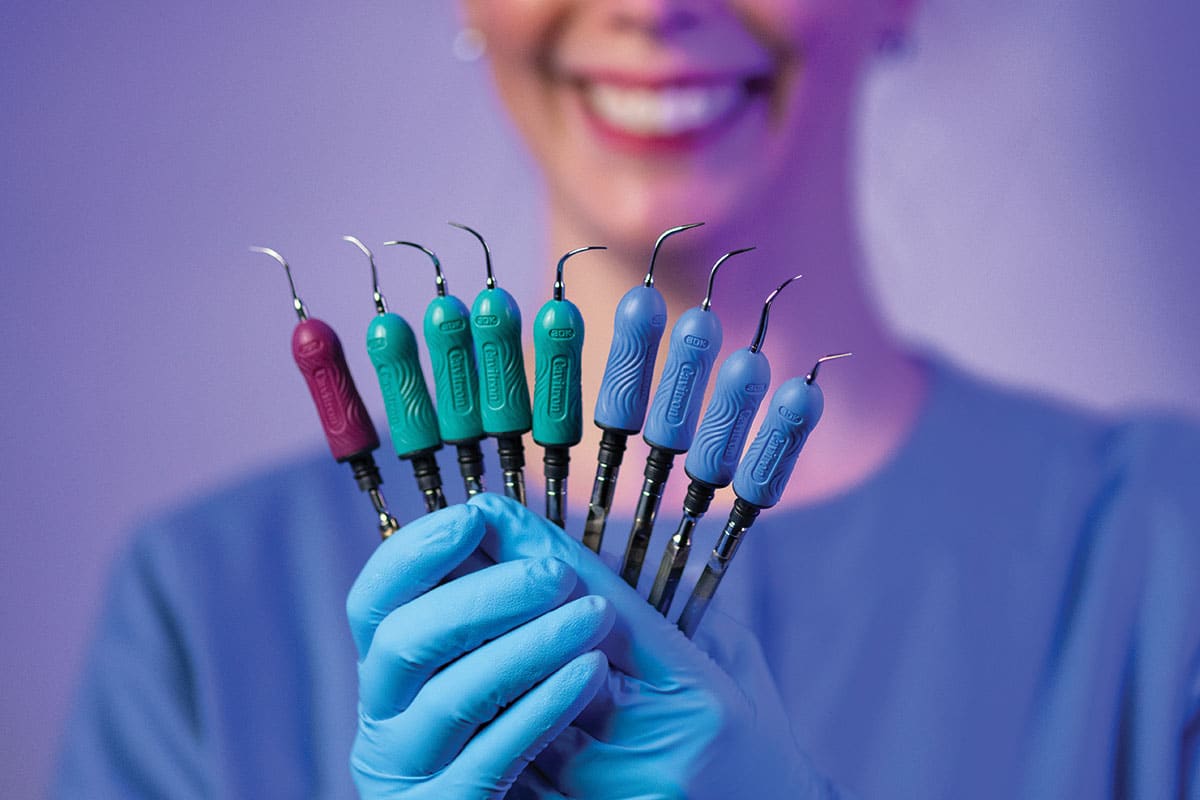
Evaluating key ultrasonic insert characteristics, such as diameter, cross section, shape, and length, supports tailored treatment plans and maximizes ultrasonic technology.
Diameter selection — ultrathin, slim, or standard — should be guided by deposit type and amount to optimize efficiency, effectiveness, and patient comfort. Cross-section options, such as round, diamond/square, or rectangular, influence how energy is distributed at the tip and how deposits are disrupted, directly impacting clinical efficiency.3 Insert shape, whether straight or curved, affects adaptation to flat or contoured anatomy, while shank length plays a key role in accessing periodontal pockets and posterior regions. The Cavitron ultrasonic insert portfolio enables clinicians to select inserts based on these characteristics to align ultrasonic performance with individual patient needs.
Optimizing Ultrasonic Technique for Patient-Centered Periodontal Care
Maximizing the benefits of ultrasonic instrumentation involves implementing proper techniques. The three A’s of ultrasonic instrumentation are:
- Adaptation
- Angulation
- Activation
When executed correctly, they enhance both effectiveness and efficiency.
The last 4 mm of a Cavitron ultrasonic insert tip is referred to as the active area. The active area is responsible for the disruption and removal of biofilm, calculus, and stain. Proper adaptation involves maintaining contact between the last 2 to 3 mm of the active tip area and the tooth surface. This is achieved by maintaining an angulation of 0 to 15° between the insert tip and the tooth surface.
Improper angulation may compromise root surface preservation, patient comfort, and effective deposit removal. Activation refers to the working stroke created and controlled by the clinician. Stroke movement is determined by deposit type and quantity and involves controlled tapping or sweeping motions that promote efficient deposit removal while maintaining patient comfort. Together, these techniques guide efficient biofilm and calculus disruption and removal during ultrasonic debridement procedures. When effective techniques are paired with appropriate insert selection, dental hygienists are better equipped to deliver efficient, patient-centered periodontal care.
Maintaining Equipment Performance
Routine maintenance of ultrasonic scaling systems, including handpieces and inserts, is often overlooked. Proper maintenance begins with following instructions for use for reprocessing and sterilization, as well as routinely evaluating ultrasonic inserts for wear, which can impact the efficiency of ultrasonic procedures.
Advancing Patient-Centered Periodontal Care
Modern periodontal care extends beyond routine scaling to embrace the principles of P4 medicine: predictive, preventive, personalized, and participatory care. Supported by the Cavitron family of inserts, clinicians can reimagine ultrasonic instrumentation through a patient-centered lens, focusing on biofilm disruption, appropriate insert selection, optimal technique, and proactive monitoring, to elevate clinical outcomes and redefine the standard of patient-centered periodontal care.
Dentsply Sirona
www.dentsplysirona.com/en-us/explore/preventive.html
844-848-0137
References
- World Health Organization. Global Oral Health Status Report. Available at who.int/team/noncommunicable-diseases/global-status-report-on-oral-health-2022. Accessed August 3, 2026.
- Bartold PM, Ivanovski S. P4 Medicine as a model for precision periodontal care. Clin Oral Investig. 2022;26:5517-5533.
- George MD, Botbyl D, Donley TG, Preshaw PM. Ultrasonic Periodontal Debridement Theory and Technique. 2nd ed. Hoboken, New Jersey: Wiley Blackwell; 2024.
From Decisions in Dentistry. September/October 2026;12(2):24-25.