

Optimal Esthetics for Implant Screw Holes
A universal shade composite layered over an opaque blocker offers a fast, predictable way to mask dark implant components.
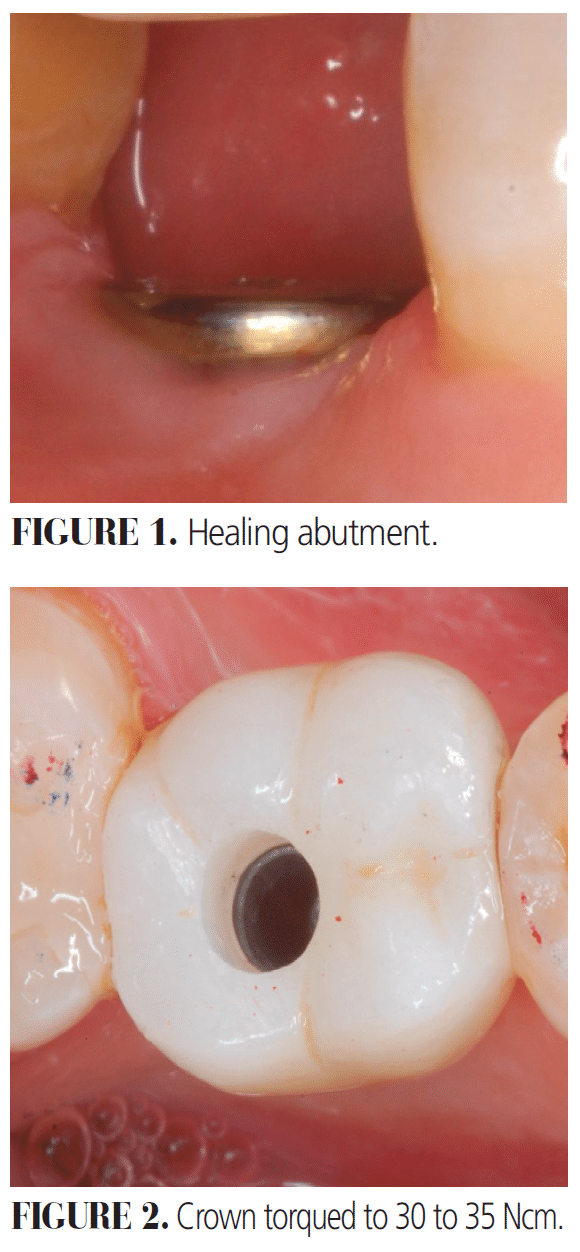 Screw-retained implant restorations have become increasingly popular due to their retrievability and predictable outcomes. However, once the final crown is delivered and the screw channel is sealed, achieving an esthetic and functional occlusal surface can present a challenge. The screw head and abutment components are typically dark, which can influence the final shade of the restoration. Selecting the right restorative material is key to ensuring both durability and seamless integration with the surrounding crown structure.
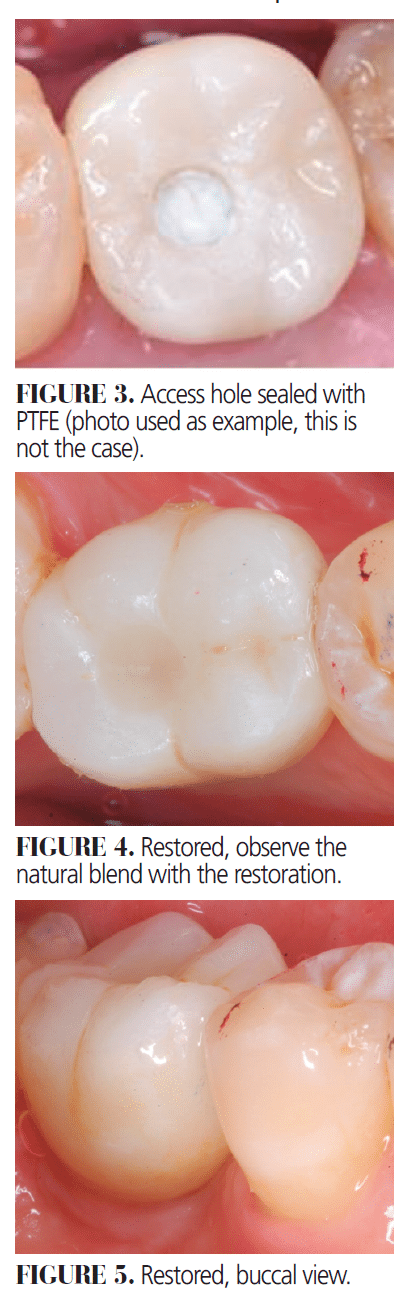
A patient presented with a screw-retained implant crown in the posterior mandibular region (Figure 1). After verifying proper seating and confirming adequate torque of the prosthetic screw, the access channel required restoration (Figure 2). Before placing the restorative material, the screw channel was sealed using a single piece of polytetrafluoroethylene (PTFE) tape (Figure 3), leaving 2 to 4 mm of restorative space for the composite.
 Once the screw head was protected, the restorative phase begins. A 1 to 2 mm 45° bevel is placed along the margin of the access opening to improve adhesion and enhance shade blending. The crown surface was then conditioned according to the restorative material. The composite was placed in incremental layers of approximately 2 mm within the access opening.
The first layer consisted of OMNICHROMA BLOCKER to mask the dark color of the underlying implant components. A second and final layer of OMNICHROMA composite was then placed and carefully adapted to the surrounding crown structure. Incremental placement allows better control during shaping and helps minimize polymerization stress.
One of the advantages of using a universal shade composite for implant access restorations is its ability to visually blend with surrounding restorative materials. The structural color technology of OMNICHROMA allows the composite to harmonize with the existing restoration, producing a natural appearance once polished. When masking darker implant components is necessary, a flowable opaquing material, such as OMNICHROMA BLOCKER Flow, should be used as the initial layer to improve the final esthetic outcome.
After final curing, the occlusion was carefully checked and adjusted to ensure the restoration did not interfere with the patient’s bite. Finishing and polishing were then performed. The final result restored the crown’s occlusal form while effectively sealing the screw access channel (Figure 4). The restoration blended well with the surrounding zirconia crown, maintaining both function and esthetics (Figure 5).
Using a universal shade composite combined with an opaque blocker layer can simplify the restorative process while delivering predictable and esthetic results.
Tokuyama
tokuyama-us.com
877-378-3548
From Decisions in Dentistry. September/October 2026;12(2):20.