

ADA Website Compliance Is No Longer Optional
From online forms to patient education videos, dental practice websites are facing growing legal scrutiny over accessibility, making compliance with the Americans With Disabilities Act a critical issue.
For many dentists, compliance with the American With Disabilities Act (ADA) traditionally meant wheelchair ramps, accessible operatories, and accommodations inside the practice. Increasingly, however, the legal focus has shifted online. Practice websites, patient portals, online scheduling systems, and digital forms are now under scrutiny as businesses face mounting pressure to make web content accessible to patients with disabilities.
Although the ADA does not provide a precise checklist for private business websites, courts and regulators have made it clear that accessibility obligations extend into the digital space. For dental practices, that means a website that is difficult to navigate for visually impaired, hearing impaired, or cognitively disabled users could create both legal exposure and barriers to patient care.
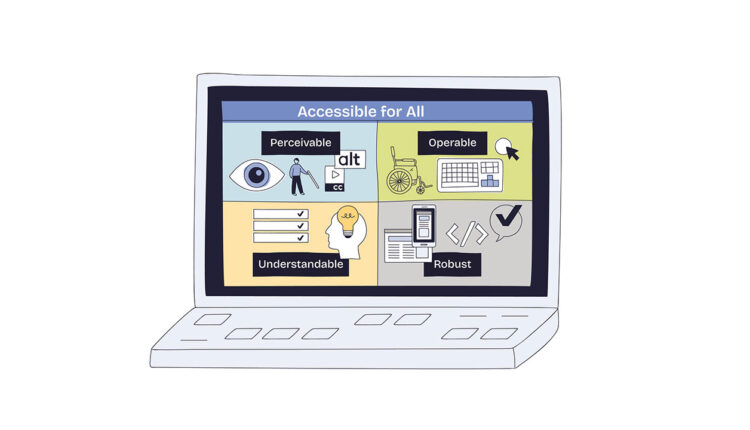
Most organizations use the Web Content Accessibility Guidelines (WCAG) 2.1 Level AA as the benchmark for compliance. While not technically federal law for private practices, these standards are widely viewed as the safest target for demonstrating a good-faith accessibility effort.
In practical terms, an ADA-conscious dental website should include features such as alternative text for images, captions or transcripts for videos, keyboard-friendly navigation, readable color contrast, clearly labeled forms, and compatibility with screen readers and assistive technologies. These upgrades help ensure patients can schedule appointments, complete intake paperwork, review treatment information, and navigate the site without unnecessary obstacles.
For dental practices, accessibility matters beyond litigation risk. Many common accessibility improvements also improve user experience, mobile usability, and search engine optimization. Organized layouts, descriptive headings, and properly coded content make websites easier for both patients and search engines to navigate.
One area creating confusion for business owners is timing. There is currently no universal federal deadline requiring all private dental practice websites to become ADA compliant. However, regulatory momentum is accelerating. In 2024, the Department of Justice finalized web accessibility rules for state and local governments under ADA Title II, adopting WCAG standards as the technical benchmark. In April 2026, the DOJ extended compliance deadlines to April 2027 or April 2028 depending on government size.
Healthcare organizations receiving federal funding through the Department of Health and Human Services face a more immediate timeline. Under HHS regulations, covered organizations are expected to comply with digital accessibility standards by May 11, 2026. While many private dental practices may not fall directly under these requirements, the direction of enforcement is unmistakable.
Importantly, lawsuits against private businesses continue even without formal regulations specifically governing commercial websites. Legal actions often focus on whether businesses made a reasonable effort to provide accessibility.
For dentists, the safest strategy is proactive compliance rather than reactive defense. An accessibility audit by a qualified web developer, updates to online forms and media, and consultation with legal counsel familiar with disability law can significantly reduce risk.
As dentistry becomes increasingly digital, website accessibility is no longer just an information technology issue but rather a modern risk management issue. Click here to read more.